

Was ist die Polyvagal-Theorie?
Die Polyvagal-Theorie (PVT), entwickelt von Stephen Porges, PhD, ist ein wissenschaftliches Rahmenkonzept, das sich auf autonome Regulation konzentriert – also darauf, wie das autonome Nervensystem fortlaufend den physiologischen Zustand des Körpers in Reaktion auf Umweltanforderungen organisiert. Die Polyvagal-Theorie beschreibt nicht nur Reaktionen auf Stress, sondern erklärt, wie autonome Regulation die dauerhafte Fähigkeit des Körpers formt, Stabilität aufrechtzuerhalten, die Gesundheit zu unterstützen und sich an verändernde Bedingungen anzupassen.
Diese Regulation funktioniert als dynamisches Rückkopplungssystem, das kontinuierlich Signale aus dem Körper, dem Gehirn, der Umgebung und sozialen Interaktionen integriert. Durch diesen fortlaufenden Informationsaustausch passt das Nervensystem den physiologischen Zustand auf eine Weise an, die Physiologie, Wahrnehmung, Verhalten und soziale Verbundenheit beeinflusst.
In jedem Moment reguliert das Nervensystem den physiologischen Zustand des Körpers – es beeinflusst Herzfrequenz, Atmung, Muskeltonus und die Bereitschaft zu handeln – basierend auf Sicherheits- oder Bedrohungssignalen. Diese Anpassungen erfolgen automatisch, häufig außerhalb des bewussten Wahrnehmens, und beeinflussen, wie wir fühlen, wie wir denken und wie wir uns zu anderen verhalten. Diese Reaktionen entstehen nicht durch einen einzelnen Nerv oder als voneinander getrennte Bereiche, sondern aus integrierten Hirnstammschaltkreisen, die autonome und motorische Systeme – einschließlich vagaler, sympathischer und respiratorischer Komponenten – zu einem einheitlichen Regulationsnetzwerk koordinieren.
Die Polyvagal-Theorie in 60 Sekunden
Unsere Kolleg*innen vom PVI haben einige der engagiertesten und bestausgebildeten Freunde des Polyvagal Institute gebeten, die Polyvagal-Theorie in ihren eigenen Worten in 20 Sekunden oder weniger zu erklären. Das haben sie zu sagen…
Die Videos sind auf Englisch verfügbar. Du kannst die automatische Übersetzung ins Deutsche aktivieren:
– Starte das Video und klicke auf das Einstellungen-Symbol (das kleine Zahnrad ⚙️).
-Wähle die Option Untertitel (Subtitles/CC).
-Wähle Englisch (automatisch erzeugt).
-Klicke anschließend erneut auf „Untertitel“ und dann auf „Automatisch übersetzen“.
-Wähle aus der Liste der verfügbaren Sprachen Deutsch aus.
3 Grundprinzipien der Polyvagal-Theorie
Die Polyvagal-Theorie lässt sich anhand von drei Kernprinzipien verstehen: der hierarchischen Organisation autonomer Schaltkreise, der Neurozeption und der Ko-Regulation. Diese Prinzipien beschreiben keine voneinander getrennten Systeme, sondern komplementäre Aspekte eines einzigen integrierten Prozesses – wie autonome Regulation strukturiert ist, wie sie gesteuert wird und wie sie in sozialen Kontexten unterstützt wird.
Diese Prinzipien entstammen der Erforschung der Frage, wie das autonome Nervensystem adaptive Reaktionen auf sich verändernde Umweltanforderungen organisiert. Obwohl sie häufig vereinfacht dargestellt werden, spiegeln sie ein integriertes und dynamisches Regulationssystem wider, das in der Neurophysiologie verwurzelt ist. Zusammen erklären sie, wie das Nervensystem den physiologischen Zustand organisiert, wie es Sicherheit und Bedrohung bewertet und wie Regulation durch Beziehungen aufrechterhalten und wiederhergestellt wird.
Hierarchische Organisation autonomer Schaltkreise gemäß der Polyvagal-Theorie
Die Polyvagal-Theorie geht davon aus, dass autonome Regulation auf evolutionär geprägten Schaltkreisen beruht, die je nach Kontext aktiviert werden.
Im Laufe der Evolution entwickelte das autonome Nervensystem der Säugetiere ein Repertoire adaptiver Reaktionsmuster. Diese Muster werden häufig als drei primäre Zustände beschrieben – die soziale Verbundenheit, Mobilisierung und Immobilisierung unterstützen – und wechseln dynamisch je nach wahrgenommener Sicherheit.
Diese Zustände sind nicht immer voneinander unabhängig. Sie können interagieren und hybride Konfigurationen bilden, die eine Bandbreite adaptiver Verhaltensweisen in sicheren wie auch bedrohlichen Kontexten ermöglichen.
- In sicheren Bedingungen unterstützen ventrale Vagusbahnen ruhige Zustände und soziale Verbundenheit. Diese Bahnen hemmen zudem defensive Aktivierung und begrenzen sympathische Mobilisierung sowie dorsal-vagalen Shutdown. Dieser regulatorische Einfluss wird häufig als „Vagusbremse” bezeichnet und spiegelt die Fähigkeit ventraler Vagusschaltkreise wider, die Herzleistung schnell zu modulieren und physiologische Ruhe aufrechtzuerhalten. Wenn der ventrale Vaguseinfluss abnimmt oder wegfällt, wird diese Hemmung aufgehoben – andere Komponenten des autonomen Nervensystems können dann effizienter metabolische Ressourcen mobilisieren oder einsparen und die Energiezuweisung auf überlebensorientierte Prozesse verlagern.
- In Gefahrensituationen unterstützen sympathische Schaltkreise die Mobilisierung (Kampf oder Flucht).
- Bei lebensbedrohlichen Zuständen unterstützen dorsale Vagusbahnen Immobilisierung oder Shutdown als Strategie der Einsparung metabolischer Ressourcen und reduzierten Energieverausgabung.
Diese Organisation wird als Hierarchie bezeichnet. In der Polyvagal-Theorie ist Hierarchie keine Rangordnung von Verhaltensweisen oder Erfahrungen; sie spiegelt die phylogenetische Organisation neuronaler Schaltkreise wider – die Reihenfolge, in der diese Schaltkreise im Laufe der Evolutionsgeschichte entstanden sind. In diesem Sinne spiegelt die Hierarchie die Phylogenie wider: Neuere Schaltkreise unterstützen soziale Verbundenheit und flexible Regulation, während ältere Schaltkreise grundlegendere Abwehrstrategien unterstützen. Diese Reaktionen sind jedoch nicht entlang eines einfachen Kontinuums angeordnet. Das Nervensystem wechselt dynamisch, auf welche Schaltkreise es sich stützt, abhängig von der fortlaufenden Bewertung von Sicherheit und Bedrohung. Je herausfordernder die Bedingungen werden, desto mehr kann sich die Regulation von neueren, flexibleren Schaltkreisen hin zu älteren, grundlegenderen verlagern. In diesem Sinne lässt sich Reaktivität als ein Prozess der Auflösung (Dissolution) verstehen, bei dem das Nervensystem den Zugang zu übergeordneten Regulationskapazitäten aufgibt und sich zunehmend auf elementarere Überlebensschaltkreise stützt.

Hinweis zur Abbildung: Das ANS-Diagramm, das in der Polyvagal-Bildung häufig verwendet wird, veranschaulicht die dynamischen Beziehungen zwischen diesen Regulationszuständen, einschließlich hybrider Konfigurationen, die in unterschiedlichen Kontexten entstehen.
Es steht unter diesem Link als Download bereit: ANS-Grafik
Neurozeption
Die Polyvagal-Theorie führt den Begriff der Neurozeption ein – die Gesamtheit neuronaler Prozesse, die kontinuierlich Signale von Sicherheit, Bedrohung und Lebensgefahr bewerten.
Neurozeption läuft größtenteils außerhalb des bewussten Wahrnehmens ab
Sie integriert interozeptive Signale (aus dem Körper), den Umgebungskontext und soziale Hinweisreize
Sie funktioniert als kontinuierliches Überwachungssystem, das Risiken bewertet und autonome Regulation steuert
Wenn Signale wahrgenommen werden, verschiebt das Nervensystem reflexartig den autonomen Zustand, um adaptive Reaktionen zu unterstützen
Neurozeption ist zustandsabhängig: Der aktuelle autonome Zustand beeinflusst, was als sicher oder bedrohlich wahrgenommen wird. Wenn ventrale Vagusregulation verfügbar ist, erkennt die Neurozeption eher Sicherheit. Wenn Abwehrschaltkreise dominieren, wird die Neurozeption auf die Erkennung von Bedrohungen ausgerichtet – selbst in neutralen Umgebungen. Neurozeption formt die fortlaufende Rückmeldung aus Körper und Umgebung und wird gleichzeitig durch sie geformt.
Neurozeption und autonomer Zustand sind eng miteinander verflochten. Individuelle Unterschiede in der Resilienz spiegeln die Fähigkeit wider, sich flexibel zwischen Zuständen zu bewegen. Wenn diese Flexibilität eingeschränkt ist, kann die Neurozeption zu chronischer Bedrohungswahrnehmung oder fehlkalibrierten Interpretationen von Sicherheit und Gefahr neigen.
3. Ko-Regulation
Die Polyvagal-Theorie betont, dass Regulation kein rein individueller Prozess ist – sie ist grundlegend relational.
Menschen senden und empfangen kontinuierlich Sicherheits- oder Gefahrensignale durch Gesichtsausdruck, Stimmklang, Gestik und Körperhaltung. Diese Signale beeinflussen den autonomen Zustand anderer und unterstützen oder stören deren Regulation.
Ko-Regulation bezeichnet den Prozess, durch den Individuen gegenseitig ihren autonomen Zustand stabilisieren. Sie lässt sich als eine Form interpersoneller Rückkopplung verstehen, bei der soziale Signale die physiologische Regulation kontinuierlich beeinflussen.
- Wenn Sicherheitssignale ausgetauscht werden, wird autonome Regulation flexibler und effizienter
- Neuronale Bahnen, die mit dem ventralen Vaguskomplex verbunden sind, unterstützen sowohl die Beruhigung defensiver Reaktionen als auch den Ausdruck sozialer Verbundenheit
- Soziale Verbundenheit ermöglicht Kommunikation durch Gesichtsausdruck, Stimmgebung und Gestik
- Beziehungen bilden den primären Kontext für die Aufrechterhaltung und Wiederherstellung von Regulation
Durch Ko-Regulation wird das Nervensystem dabei unterstützt, den Zugang zu integrierten, sozial verbundenen Zuständen aufrechtzuerhalten und sich von Phasen defensiver Aktivierung zu erholen.
Warum die Polyvagal-Theorie bedeutsam ist
Da der autonome Zustand Wahrnehmung, Emotionen, Verhalten und sensorische Körperempfindungen beeinflusst – einschließlich Schmerz, der durch interozeptive Prozesse geprägt und durch den autonomen Zustand beeinflusst wird – spielt er eine zentrale Rolle bei:
- Trauma- und Stressreaktionen
- psychischer und körperlicher Gesundheit
- sozialer Verbundenheit und Kommunikation
- Resilienz und Erholung
Die Polyvagal-Theorie hilft zu erklären, warum Menschen sich in einem Moment ruhig und verbunden fühlen können und im nächsten reaktiv, belastet oder sogar körperlich unwohl oder in Schmerz – selbst in ähnlichen Umgebungen. Aus dieser Perspektive ist Reaktivität nicht einfach ein psychologisches Problem, sondern spiegelt eine Verschiebung in der zugrundeliegenden Organisation des Nervensystems wider. Wenn die Bedingungen herausfordernder werden, kann das System einen Prozess der Auflösung durchlaufen, bei dem der Zugang zu übergeordneten Regulationskapazitäten abnimmt und primitivere Überlebensschaltkreise dominieren.
Adaptives Funktionieren bedeutet nicht, in einem einzigen Zustand zu verbleiben, sondern die Fähigkeit aufrechtzuerhalten, sich flexibel zwischen Zuständen zu bewegen und den Zugang zu integrierter, sozial verbundener Regulation wiederherzustellen, sobald die Bedingungen es erlauben. Erholung lässt sich so als ein Prozess der Wiederherstellung verstehen – die Reaktivierung übergeordneter Regulationsschaltkreise und die Rückkehr integrativer Kapazität im Nervensystem.

Anwendungsgebiete der Polyvagal-Theorie
Die Polyvagal-Theorie hat Forschung und Praxis in verschiedenen Bereichen beeinflusst, darunter:
- Psychische Gesundheit und Traumabehandlung
- Medizin und Gesundheitsversorgung
- Bildung und Lernumgebungen
- Organisationsführung und Leistung
In all diesen Bereichen unterstreicht die Theorie die Bedeutung von Sicherheit, Ko-Regulation und physiologischer Flexibilität für die Förderung von Wohlbefinden und effektivem Funktionieren.

Konzeptuelle Übersicht: Hierarchie, Dissolution (Auflösung) und Regeneration
Die Grundprinzipien der Polyvagal-Theorie lassen sich als dynamischer Prozess zusammenfassen:
Hierarchie (Phylogenie)
Neuere, flexiblere Schaltkreise unterstützen soziale Verbundenheit und Regulation
↓ unter Belastung
Dissolution (Auflösung) - Reaktivität
Das Nervensystem verlagert sich hin zu älteren Überlebensschaltkreisen und schränkt den Zugang zu übergeordneter Regulation ein
↓ mit Sicherheit und Unterstützung
Regeneration (Wiederherstellung)
Übergeordnete Schaltkreise werden wieder aktiviert und stellen Flexibilität, Verbundenheit und Regulation wieder her
Dieser Prozess spiegelt wider, wie das Nervensystem sich kontinuierlich an verändernde Bedingungen anpasst und je nach Bedarf zwischen Schutz und Verbundenheit wechselt.

Ein Hinweis zu Metaphern, Anwendungenund wissenschaftlicher Fundierung
Die Polyvagal-Theorie ist in der Neurowissenschaft verwurzelt und beschreibt, wie integrierte autonome Schaltkreise den physiologischen Zustand regulieren. Im Zuge der Anwendung der Theorie in verschiedenen Disziplinen haben Praktizierende Metaphern und praxisbezogene Sprache entwickelt, um diese Konzepte auf zugängliche und für ihre Arbeit relevante Weise zu vermitteln.
Diese Übertragungen können wertvolle Werkzeuge sein. Gleichzeitig ist es wesentlich zu erkennen, dass es sich dabei um Interpretationen der Wissenschaft handelt – nicht um die wissenschaftliche Grundlage selbst. Der Kern der Polyvagal-Theorie bleibt in der Erforschung neuronaler Schaltkreise, autonomer Regulation und physiologischer Zustände verankert.
Eine verantwortungsvolle Anwendung erfordert eine klare Unterscheidung zwischen:
- Wissenschaftlicher Grundlage (Neuroanatomie, Physiologie und Regulationsmechanismen)
- Angewandter Sprache (Metaphern, Modelle sowie klinische, pädagogische oder organisationale Rahmensetzungen)
Diese Unterscheidung zu wahren schützt die Integrität der Theorie, fördert präzise Kommunikation und verringert das Risiko von Fehldeutungen oder Kritik auf Basis unvollständiger oder metaphorischer Darstellungen. Verschiedene Disziplinen bringen unterschiedliche Sprachen, Rollen und Verantwortlichkeiten mit sich. Diese Vielfalt in der Anwendung ist eine Stärke – solange sie mit den wissenschaftlichen Kernprinzipien verbunden bleibt. Auf diese Weise kann die Polyvagal-Theorie in unterschiedliche Kontexte übertragen werden und dabei fest in ihren empirischen und neurophysiologischen Grundlagen verankert bleiben.
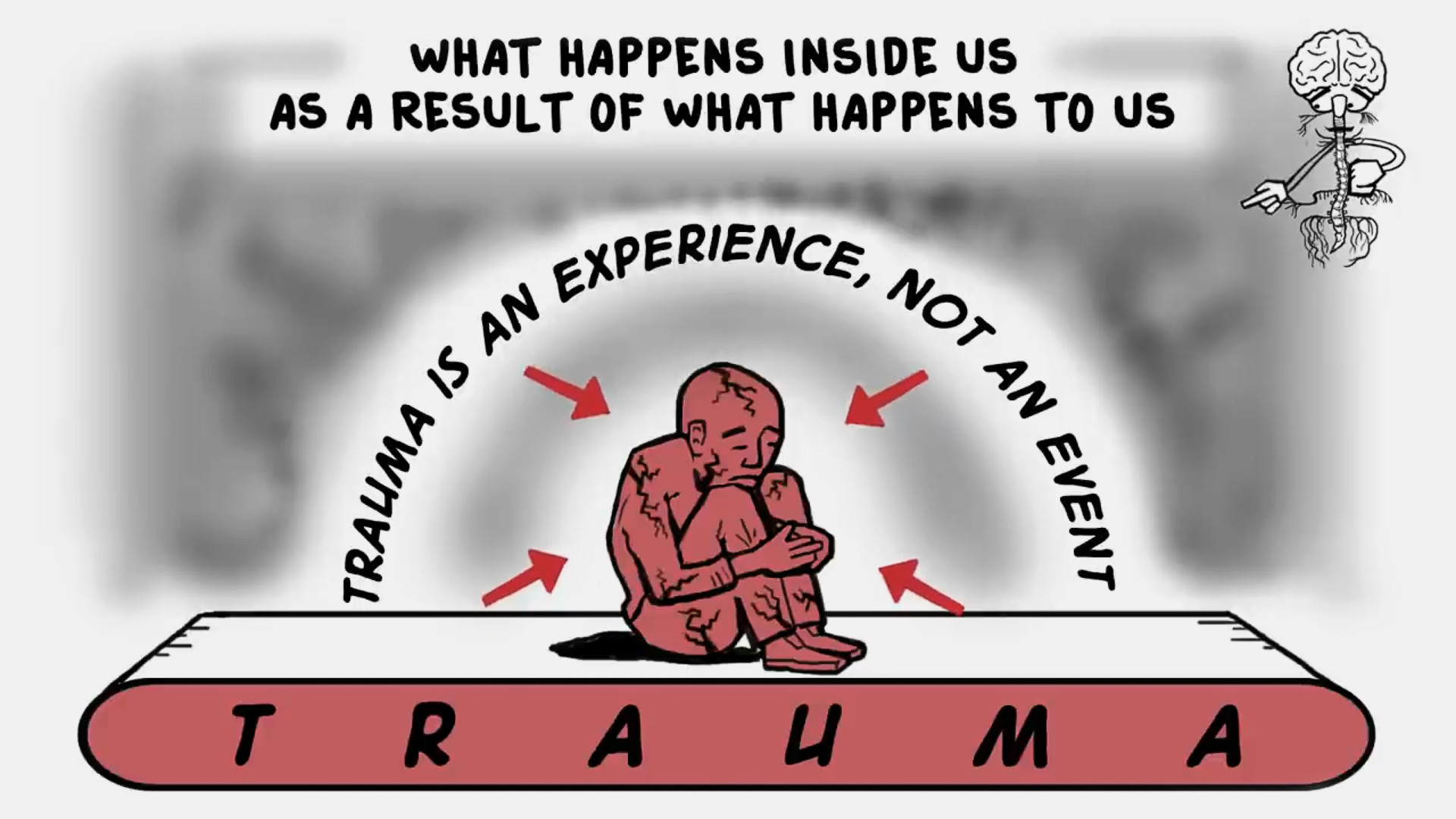
Trauma und das Nervensystem:Eine Polyvagale Perspektive
Häufig gestellte Fragen zur Polyvagal-Theorie
Was ist die Polyvagal-Theorie?
Ein wissenschaftliches Rahmenkonzept, das erklärt, wie das autonome Nervensystem unseren Zustand in Reaktion auf Sicherheit und Bedrohung reguliert.
Was sind die wichtigsten Nervensystemzustände?
Soziale Verbundenheit (Verbindung), Mobilisierung (Kampf/Flucht) und Immobilisierung (Shutdown).
Wir durchlaufen auch hybride Zustände, in denen sich Elemente dieser Reaktionen vermischen und die große Bandbreite menschlicher Erfahrung formen.
Was ist Neurozeption?
Die automatische (unterhalb der Bewustseinsschwelle) Erkennung von Sicherheit oder Gefahr durch dein Nervensystem.
Was ist Ko-Regulation?
Wie Menschen sich gegenseitig durch soziale Interaktion regulieren.
Warum ist das bedeutsam?
Weil dein physiologischer Zustand beeinflusst, wie du fühlst, denkst, dich verhältst und sogar deinen Körper spürst.
Die Polyvagal-Theorie ist ein wissenschaftliches Rahmenkonzept zum Verständnis autonomer Regulation – also wie das Nervensystem den physiologischen Zustand in Reaktion auf Sicherheits- und Bedrohungssignale organisiert.
Zu Kommunikationszwecken werden diese adaptiven Muster häufig als drei Reaktionstendenzen beschrieben:
- Soziale Verbundenheit (ventrale Vagusregulation): unterstützt ruhige Zustände, Verbindung und flexible Regulation
- Mobilisierung (sympathische Aktivierung): unterstützt Handlungsbereitschaft wie Kampf oder Flucht
- Immobilisierung (dorsal-vagale Regulation): unterstützt Shutdown oder Energieeinsparung
Dies sind keine getrennten „Äste”, und sie werden nicht durch einen einzelnen Nerv gesteuert. Sie spiegeln die koordinierte Aktivität von integrierten Schaltkreisen zwischen Hirnstamm und autonomem Nervensystem wider. Im realen Alltag können sich diese Muster zu hybriden Zuständen verbinden, anstatt als isolierte Kategorien zu existieren.
Integrative Klarstellung
Die Polyvagal-Theorie unterscheidet zwischen neuronalen Schaltkreisen (Anatomie), autonomen Zuständen (Physiologie) sowie Verhaltens- und psychologischen Ausdrucksformen. Das Konzept der Hierarchie bezieht sich auf die phylogenetische Organisation autonomer Schaltkreise, die physiologische Regulation einschränkt und Verhalten formt. Dieses Rahmenkonzept entstand aus empirischen Beobachtungen und wurde in experimentellen und klinischen Kontexten erprobt.
Die Polyvagal-Theorie hilft dir zu verstehen, wie der autonome Zustand Erleben und Verhalten beeinflusst.
Praktische Anwendungen umfassen:
- Körpersignale wahrnehmen (Interozeption): Werde dir Veränderungen in Atmung, Herzfrequenz, Muskeltonus und Energie bewusst
- Regulation unterstützen: Praktiken wie langsames Atmen, Bewegung und sichere soziale Interaktion können helfen, den Zustand zu stabilisieren
- Verbundenheit priorisieren: Positive soziale Verbundenheit unterstützt ventrale Vagusregulation
- Auslöser verstehen: Unterschiedliche Kontexte können den autonomen Zustand durch Neurozeption verschieben
- Bei Bedarf Unterstützung suchen: Professionelle Begleitung kann helfen, Flexibilität und Regulation wiederherzustellen
Traumatische Erfahrungen können das Nervensystem in Richtung defensiver Zustände ausrichten und den Zugang zu sozial verbundener Regulation einschränken.
Wirksame Interventionen konzentrieren sich auf:
- die Wiederherstellung eines Sicherheitsgefühls
- die Steigerung des Bewusstseins für Körperzustände
- die schrittweise Rückkehr zu regulierten Zuständen
Viele therapeutische Ansätze integrieren diese Prinzipien, indem sie mit dem physiologischen Zustand arbeiten – nicht vorrangig mit der Kognition.
Diese Begriffe beschreiben adaptive Überlebensstrategien, die in Kontexten chronischer oder schwerer Bedrohung entstehen können.
Fawning (Unterwerfung): konformitätsorientiertes Verhalten, das unmittelbare Bedrohung reduzieren kann
Appeasement (Beschwichtigung): Interaktionsstrategien, die versuchen, das Nervensystem einer anderen Person durch soziale Signale zu beeinflussen, und als eine Form der Ko-Regulation unter Bedrohungsbedingungen verstanden werden kann
Diese Reaktionen lassen sich am besten als zustandsabhängige Anpassungen verstehen, die möglicherweise hybride autonome Konfigurationen beinhalten. Sie sind keine Zeichen von Schwäche, sondern Ausdruck der Bemühung des Nervensystems, unter extremen Bedingungen das Überleben zu sichern.
Der ventral-vagale Zustand bezeichnet ein Muster autonomer Regulation, das mit Ruhe, sozialer Verbundenheit und Flexibilität verbunden ist.
Er spiegelt die Aktivität ventraler Vagusbahnen innerhalb eines übergeordneten integrierten Systems wider und unterstützt:
- Regulation von Herz und Atmung
- Gesichtsausdruck und Stimmgebung
- Fähigkeit zur Verbindung und Kommunikation
Dieser Zustand ermöglicht effizienten Energieeinsatz, soziale Verbundenheit und Resilienz.
Anstatt einen einzelnen Nerv zu „aktivieren”, besteht das Ziel darin, die gesamte autonome Regulation zu unterstützen.
Hilfreiche Ansätze umfassen:
- langsames, rhythmisches Atmen
- sichere soziale Interaktion
- Bewegung und Körperwahrnehmung
- Umgebungen, die sich vorhersehbar und unterstützend anfühlen
Regulation bedeutet nicht, in einem einzigen Zustand zu verbleiben, sondern Flexibilität und die Fähigkeit zur Wiederherstellung aufrechtzuerhalten.
Ja. Die Theorie unterstreicht die Bedeutung von Sicherheit und Ko-Regulation in Lernumgebungen.
Anwendungen umfassen:
- die Schaffung vorhersehbarer, unterstützender Umgebungen
- die Förderung positiver sozialer Interaktion
- den Einbezug von Bewegung und Regulationspausen
- den Einsatz von Stimmklang und Gesichtsausdruck zur Signalisierung von Sicherheit
Wenn Schülerinnen und Schüler sich sicher fühlen, unterstützt ihr Nervensystem Engagement und Lernen.
Die Polyvagal-Theorie kann die Versorgung bereichern, indem sie den physiologischen Zustand und Sicherheit in den Mittelpunkt stellt.
Anwendungen umfassen:
- traumasensible Ansätze
- das Verstehen von Patient*innenverhalten durch den autonomen Zustand
- die Unterstützung von Regulation zur Verbesserung von Behandlungsergebnissen
- die Erkennung von Zusammenhängen zwischen autonomem Zustand und Symptomen (einschließlich Schmerz)
Die Beziehung zwischen Pflegenden und Patientinnen bzw. Patienten kann als ko-regulatorisches System fungieren, das Heilung unterstützt.
Die Polyvagal-Theorie ist ein transdisziplinäres Rahmenkonzept, das Neurowissenschaften, Physiologie und Evolutionsbiologie verbindet. Wie viele integrative Theorien hat sie Diskussionen und Kritik hervorgerufen.
Wichtig ist, dass einige Kritiken auf Fehldarstellungen oder Vereinfachungen der Theorie beruhen – häufig entstanden durch klinische oder umgangssprachliche Metaphern, die von der wissenschaftlichen Grundlage nicht gedeckt werden. Dazu gehört etwa die Behandlung der Theorie als Beschreibung getrennter Systeme statt eines integrierten Regulationsnetzwerks oder die Gleichsetzung anatomischer Strukturen mit funktionalen Prozessen.
Für diejenigen, die die Theorie in der Praxis anwenden, ist es wichtig, zwischen der wissenschaftlichen Grundlage und der metaphorischen Sprache zu unterscheiden, die zur Kommunikation verwendet wird. Metaphern können nützlich sein, sollten jedoch die zugrundeliegenden neurophysiologischen Prinzipien der Theorie nicht ersetzen oder neu definieren.
Präzisere Lesarten der Theorie betonen ihren Fokus auf autonome Regulation, phylogenetisch organisierte Schaltkreise und zustandsabhängige Physiologie.
Obwohl die Theorie angefochten wurde, beruhen viele dieser Kritiken auf Missverständnissen oder Fehldarstellungen – darunter die Gleichsetzung anatomischer Beschreibungen mit physiologischer Funktion. Bei eingehender Betrachtung und im Vergleich mit den ursprünglichen, peer-reviewten Grundlagenarbeiten lassen sich diese Kritikpunkte häufig ohne Weiteres ausräumen.
Laufende Forschung verfeinert, erprobt und erweitert die Theorie weiterhin in experimentellen und klinischen Kontexten.
Mehr Informationen zu diesem Aspekt finden Sie auf der Seite: Kritik an der PVT
Der Vagusnerv ist ein wichtiger Bestandteil des autonomen Nervensystems, der den Hirnstamm mit den Organen des Körpers verbindet.
Er trägt zur Regulation von Herzfrequenz, Atmung, Verdauung und Aspekten des Sozialverhaltens bei – als Teil integrierter autonomer Schaltkreise.
Die Vagusbremse bezeichnet den schnellen, von Herzschlag zu Herzschlag wirkenden Einfluss ventraler Vagusbahnen auf das Herz. Wenn sie aktiv ist, unterstützt sie einen ruhigen physiologischen Zustand, indem sie die Herzleistung reguliert und die Flexibilität bei der Reaktion auf Umweltanforderungen fördert.
Wenn die Vagusbremse gelöst wird, kann die Herzfrequenz schnell ansteigen und dem Körper ermöglichen, sich zur Handlung zu mobilisieren. Dieser Mechanismus spiegelt dynamische Regulation wider – keine einfache Ein-/Aus-Steuerung – und ist in übergeordnete autonome Rückkopplungsprozesse eingebettet (z. B. kardiopulmonale Rhythmen wie die RSA).
Das Vagusparadox bezeichnet die Beobachtung, dass Vagusbahnen sowohl an ruhigen, sozial verbundenen Zuständen (ventral-vagale Regulation) als auch an Immobilisierungs- oder Shutdown-Reaktionen (dorsal-vagale Regulation) beteiligt sind.
Dies ist kein Widerspruch, sondern spiegelt die Existenz funktional unterschiedlicher Vagusschaltkreise mit verschiedenen Aufgaben wider. Die Polyvagal-Theorie unterscheidet diese Schaltkreise anhand ihrer phylogenetischen Organisation und ihrer funktionalen Eigenschaften und verdeutlicht, wie vagale Einflüsse je nach Kontext sowohl Regulation als auch Abwehrreaktionen unterstützen können.
Das System der sozialen Kommunikation bezeichnet eine integrierte Gruppe neuronaler Bahnen, die Gesichtsausdruck, Stimmgebung, Zuhören und autonome Regulation koordinieren, um soziale Interaktion zu unterstützen.
Wichtig ist dabei: Der ventrale Vaguskomplex (VVC) bezeichnet die anatomischen Hirnstammstrukturen und Bahnen, die zur autonomen Regulation beitragen, während das System der sozialen Kommunikation (Social Engagement System, SES) die funktionale Integration dieser autonomen Bahnen mit Hirnnerven-Schaltkreisen beschreibt, die Kommunikation und Ko-Regulation unterstützen.
Diese Bahnen verbinden Hirnstammkerne, die Herz und Lunge regulieren, mit Hirnnerven, die Gesicht, Kopf und Stimme steuern. Diese Strukturen teilen einen gemeinsamen embryologischen Ursprung in den pharyngealen (branchialen) Bögen, einschließlich der Hirnnerven V, VII, IX, X und XI, die Komponenten spezieller viszeral-efferenter Bahnen sind und eine entwicklungsbiologische und funktionale Grundlage für die Integration autonomer Regulation mit sozialer Kommunikation bilden.
Diese Bahnen werden häufig als spezielle viszeral-efferente Bahnen bezeichnet, da sie ihren Ursprung in der Branchialbögenmuskulatur haben und bei Säugetieren zur Unterstützung sozialer Kommunikation umgewidmet wurden.
Diese Integration ermöglicht es dem Einzelnen, Sicherheit zu signalisieren, effektiv zu kommunizieren und mit anderen in Kontakt zu treten.
Wenn das System der sozialen Kommunikation aktiv ist, unterstützt es ruhige Zustände, Verbundenheit und Ko-Regulation. Wenn es eingeschränkt oder gehemmt ist, kann soziale Kommunikation eingeschränkt werden, da Abwehrsysteme dominieren.
Der ventrale Vaguskomplex (VVC von engl. “ventral vagal complex”) bezeichnet eine Gruppe von Hirnstammstrukturen – darunter der Nucleus ambiguus und assoziierte Kerne, die die Muskulatur von Gesicht und Kopf regulieren (über die Hirnnerven V, VII, IX, X und XI) – aus denen myelinisierte Vagusbahnen zum Herzen hervorgehen.
Als anatomisches Konstrukt spezifiziert der VVC den Ursprung und den Verlauf dieser efferenten Fasern. Als funktionales Konstrukt trägt die Aktivität innerhalb dieser Bahnen zur schnellen, flexiblen Regulation der Herzleistung bei (häufig als „Vagusbremse” bezeichnet) und unterstützt die physiologischen Bedingungen, die soziale Verbundenheit ermöglichen.
Durch koordinierte Wechselwirkungen mit den Hirnnerven-Bahnen des Systems der sozialen Interaktion ist die VVC-Aktivität mit Mustern von Gesichtsausdruck, Stimmgebung, Zuhören und Zustandsregulation verbunden. Diese Funktionen entstehen aus integrierten Schaltkreisdynamiken und nicht aus einer einzelnen Struktur, die isoliert wirkt.
Auf diese Weise bildet der VVC eine strukturelle Grundlage für Formen autonomer Regulation, die – wenn verfügbar – mit Ruhe, Verbundenheit und adaptiver Flexibilität verbunden sind. Entscheidend ist dabei die Integration und Kommunikation zwischen diesen Hirnstammbahnen – die Herzregulation mit der Steuerung der Gesichts- und Kopfmuskulatur verbindet –, die das zentrale Merkmal darstellt, das koordinierten physiologischen Zustand und soziale Verbundenheit ermöglicht. In diesem Sinne fungiert der VVC als Knotenpunkt für Ko-Regulation und verbindet soziale Interaktion mit physiologischer Beruhigung.
Bei der Vagusnerv-Stimulation werden Geräte eingesetzt, die elektrische Impulse abgeben, um die autonome Funktion zu beeinflussen.
Diese Interventionen zielen in erster Linie auf vagale afferente Bahnen ab, die Signale vom Körper zum Gehirn übertragen und Hirnfunktion sowie Regulationsprozesse modulieren können.
Diese Geräte werden bei bestimmten medizinischen Erkrankungen eingesetzt und sind Gegenstand laufender Forschung.
Die Polyvagal Akademie ist eine gemeinnützige Organisation und der offizielle Partner des Polyvagal Institute im deutschsprachigenn Raum. Als PVA verbreiten wir Wissen, das direkt auf den wissenschaftlichen Quellen der PVT basiert. Unsere Arbeit konzentriert sich auf die fundierte Übertragung und Anwendung der Polyvagal-Theorie im deutschsprachigen Kontext – in Übereinstimmung mit deren empirischen und neurophysiologischen Grundlagen. Wir repräsentieren das Bildungsangebot des PVI im deutschsprachigen Raum.
Unsere Mission ist es, soziale Kommunikation und Verbundenheit zu fördern, indem wir Bewusstsein schaffen, Gemeinschaft aufbauen, Forschung unterstützen und Bildungsangebote rund um das zeitgemäße Verständnis der Geist-Körper-Beziehung bereitstellen.
Das Polyvagal Institute ist eine gemeinnützige Organisation, die sich der Förderung des Verständnisses autonomer Regulation durch Forschung, Bildung und Gemeinschaft widmet.
Das Institut arbeitet daran, die wissenschaftlichen Prinzipien der Polyvagal-Theorie in zugängliche, evidenzbasierte Ressourcen zu übersetzen und dabei eine klare Verbindung zu den neurophysiologischen Grundlagen aufrechtzuerhalten.
Durch Ausbildung, Zusammenarbeit und Gemeinschaftsaufbau unterstützt es die verantwortungsvolle Anwendung der Theorie in verschiedenen Disziplinen, darunter Gesundheitsversorgung, psychische Gesundheit, Bildung und Organisationsumgebungen.
Das Safe and Sound Protocol (SSP) ist eine hörbasierte Intervention, die darauf ausgelegt ist, autonome Regulation zu unterstützen und die Fähigkeit zur sozialen Verbundenheit sowie zur sensorischen Verarbeitung zu verbessern.
Das SSP ist eine klinisch angewendete Intervention, während andere klangbasierte Ansätze (z. B. akustische Feedback-Modelle) möglicherweise darauf abzielen, endogene Regulationsprozesse durch andere Mechanismen zu unterstützen.
Weitere Informationen zum SSP sind englischsprachig über Unyte erhältlich.
Das Rest and Restore Protocol ist eine Anwendung der Sonic Augmentation Technology, entwickelt von Sonocea, die darauf ausgelegt ist, Erholung und Wiederherstellung autonomer Regulation zu unterstützen.
Es verwendet strukturierte akustische Signale, um:
- die Stabilisierung des physiologischen Zustands zu fördern
- vagale Regulation und autonomes Gleichgewicht zu unterstützen
- Übergänge aus defensiven Zuständen zu erleichtern
- die Fähigkeit des Körpers zur Ruhe, Erholung und Heilung zu stärken
Dieses Protokoll steht im Einklang mit den Polyvagal-Prinzipien, indem es die Wiederherstellung nach Phasen der Dissolution (Auflösung) unterstützt, die Reaktivierung übergeordneter Regulationsschaltkreise fördert und die gesamte autonome Flexibilität verbessert.
Krisenressourcen
Die Polyvagal Akademie ist eine Bildungsorganisation und bietet keine Beratung, Gesundheitsversorgung oder Therapie an. Wir vermitteln auch keine Fachkräfte, die diese Leistungen anbieten.
Wenn du dich in einer Notlage befindest oder Gefahr besteht, dir selbst oder anderen Schaden zuzufügen, ruf bitte 112 an (europaweiter Notruf) oder geh direkt in die nächste Notaufnahme.
Die folgenden Anlaufstellen stehen dir zur Unterstützung zur Verfügung:
Psychische Krisen & Suizidprävention
TelefonSeelsorge Deutschland: 0800 111 0 111 oder 0800 111 0 222 (kostenlos, 24/7)
TelefonSeelsorge Österreich: 142 (kostenlos, 24/7)
Die Dargebotene Hand Schweiz / Liechtenstein: 143 (kostenlos, 24/7)
Psychologisches Krisentelefon Südtirol: 800 101 800 (kostenlos, 24/7)
Kinder & Jugendliche
Kinder- und Jugendtelefon Deutschland: 116 111 (kostenlos, Mo–Sa 14–20 Uhr)
Rat auf Draht Österreich: 147 (kostenlos, 24/7)
Pro Juventute Schweiz: 147 (kostenlos, 24/7)
Young & Direct Südtirol: 0471 1551551 (Mo–Fr 14:30–19:30 Uhr)
Gewalt gegen Frauen & häusliche Gewalt
Hilfetelefon „Gewalt gegen Frauen” Deutschland: 116 016 (kostenlos, 24/7)
Frauenhelpline Österreich: 0800 222 555 (kostenlos, 24/7)
Opferhilfe Schweiz: Regionale Beratungsstellen (Suche nach Kanton)